Quick answerOnly attempt small, exposed nests (golf-ball to tennis-ball size) and only at night when wasps are dormant. Wear full coverage, spray a wasp-specific insecticide from 15–20 feet, then leave. Anything larger, hidden in a wall, underground, or near an allergic person — that's a pro job, full stop.
What you'll need
- Wasp-specific spray with a 15–20 ft jet range ($8–$15 a can — get the foaming kind if you can)
- Long sleeves, long trousers, closed shoes, gloves
- Eye protection or sunglasses at minimum
- A red-filter flashlight or phone on dim (wasps react less to red light)
- A clear escape path planned before you start
Step-by-step
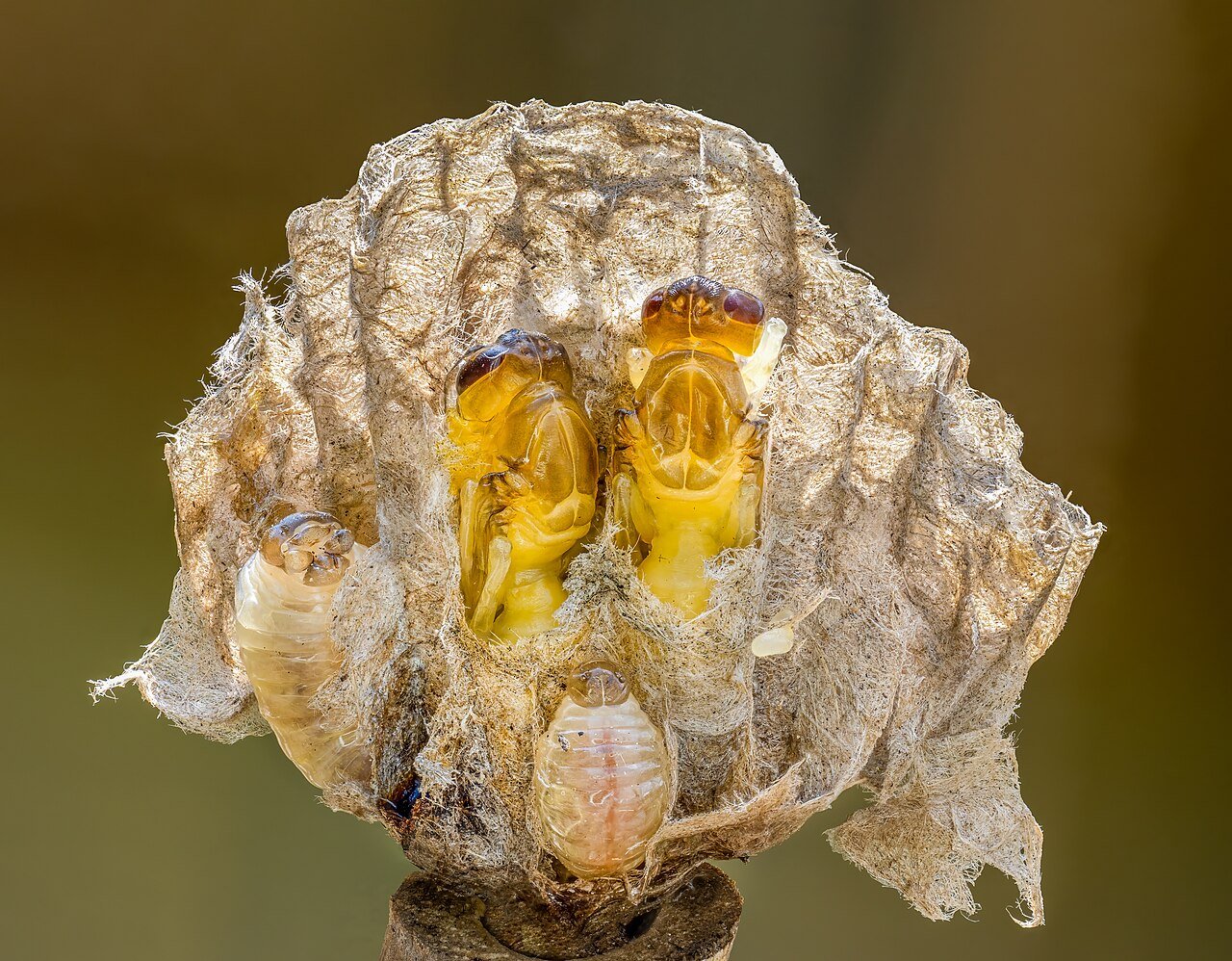
- Identify what you're dealing with. Paper wasps build open umbrella-shaped nests under eaves. Yellowjackets build enclosed grey papery balls, often in wall voids or underground. Honeybees are fuzzy and should never be sprayed — call a beekeeper for relocation instead.
- Size it up honestly. If the nest is bigger than a tennis ball, if you can't clearly see the whole thing, if it's inside a wall or in the ground, or if there's heavy traffic in and out — stop here and call a pro. This guide is only for small, visible, reachable nests.
- Wait until after dark. Wasps return to the nest at night and become sluggish in the cool. Late evening or well after sunset is the window. Never attempt this in daylight when foragers are coming and going.
- Suit up fully. Cover every inch of skin — long sleeves tucked into gloves, trousers tucked into socks, shoes not sandals. A hood or hat helps. You're not being paranoid; you're being sensible.
- Plan your exit first. Know exactly which way you'll walk (not run — running flails attract attention) back inside. Keep the door unlocked and the path clear. Don't position yourself between the nest and your exit.
- Spray the entrance from distance. Aim the jet directly at the nest entrance and soak it for 10–15 seconds, covering the whole nest. Then walk calmly back inside. Don't stand there watching.
- Wait 24 hours, then remove. Come back the next evening. If there's no activity, knock the nest down with a long pole and bag it. If wasps are still active, repeat the spray the following night or call a pro.
<div class="safety"> <strong>🛑 Stop and call a pro if:</strong> <ul> <li>Anyone in your household is allergic to wasp stings — this is non-negotiable, even for small nests.</li> <li>The nest is larger than a tennis ball, inside a wall cavity, in the ground, or somewhere you need a tall ladder to reach.</li> <li>You see dozens of wasps coming and going (yellowjacket colony) — these defend aggressively and can sting repeatedly.</li> <li>It's a honeybee swarm or hive — bees are protected pollinators in many areas; a beekeeper will relocate them, often free.</li> </ul> </div>
DIY vs pro cost
| Option | Typical cost |
|---|---|
| DIY | $10–$20 |
| Pro visit | $100–$250 |
Printable checklist
- [ ] Confirm they're wasps, not honeybees
- [ ] Nest is small, visible, and reachable from the ground
- [ ] No allergies in the household
- [ ] Wait until well after dark
- [ ] Cover all skin; eye protection on
- [ ] Escape route planned, door unlocked
- [ ] Spray entrance 10–15 seconds from 15–20 ft
- [ ] Remove dead nest the next evening
Related guides
- How to Get Rid of Ants in the House (That Actually Works)
- How to Get Rid of Mice (Traps, Sealing Entry Points)
- How to Get Rid of Cockroaches Permanently (Pro Method)
Frequently asked questions
What's the best time of day to spray a wasp nest?
At night, at least an hour after sunset. The whole colony is home and sluggish in the cooler air, so you get maximum effect with minimum defensive response. Early morning before they're active is the second-best option.
Can I just knock the nest down with water?
Please don't. A hose scatters angry wasps in every direction without killing them, and you'll be standing right there. Wasp spray is designed to drop them fast from a safe distance — use the right tool.
How do I tell wasps from bees?
Wasps are smooth, shiny, and narrow-waisted with bright yellow and black markings. Honeybees are fuzzy, rounder, and more golden-brown. If it's fuzzy, don't spray — search for a local beekeeper who relocates hives.
Will the wasps come back to the same spot next year?
Often, yes — the location clearly worked for them once. After removing the nest, seal the gap or hang a decoy nest nearby; wasps are territorial and tend to avoid spots that look occupied.
Advertisement