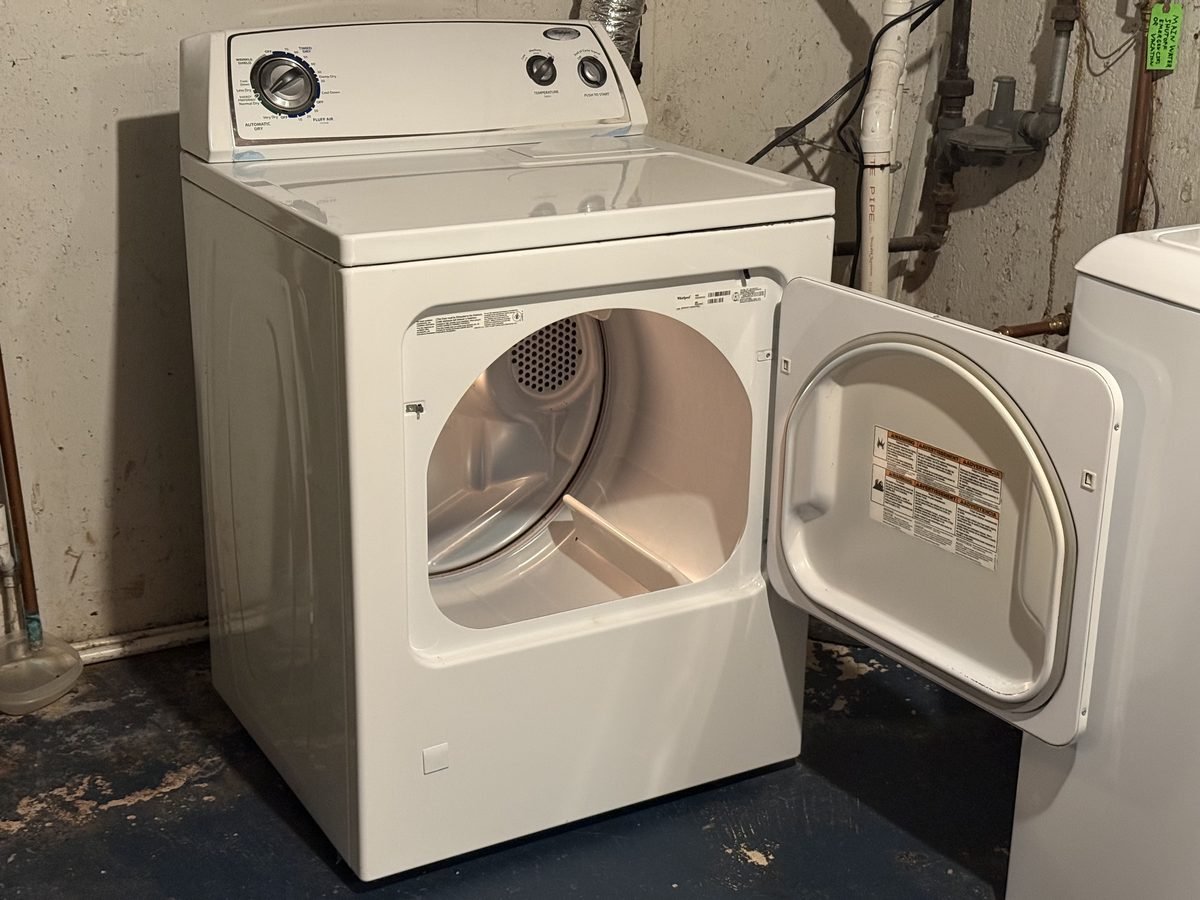
Quick answerClean the lint filter and the entire vent path first — restricted airflow is the #1 cause of no-heat and a genuine fire hazard. If airflow is clear, test the thermal fuse (a $10–$20 part). Element failure is the least common cause.
What you'll need
- Vacuum with hose attachment
- Dryer vent brush kit ($10–$15)
- Multimeter ($15–$25, for testing the fuse)
- Screwdriver set
- Thermal fuse kit ($10–$20, buy after diagnosing)
Step-by-step
- Unplug the dryer — and if it's gas, turn off the gas. Electric dryers: pull the plug (it's a big 240V plug, often hard to reach). Gas dryers: turn the supply valve to OFF as well. No power, no gas, no risk while you're working.
- Clean the lint filter properly. Pull the lint screen and clean it — then wash it with hot water, dish soap, and a soft brush. Dryer sheets leave an invisible waxy film that blocks airflow even when the screen looks clean. This alone fixes a surprising number of "not heating" complaints.
- Check the entire vent path. Pull the dryer out and disconnect the vent hose. Scoop out lint from both ends, then run a vent brush through the full duct to the outside. Go outside and check the exterior vent hood — the flapper should move freely and not be caked with lint. A clogged vent is the top cause of no-heat and a leading cause of house fires, so don't rush this step.
- Confirm the dryer is actually getting power. For electric dryers: check the breaker — dryers run on a double-pole 240V breaker, and sometimes one half trips while the other holds, leaving the drum turning with no heat. Flip it fully off and back on. For gas, confirm the gas valve is open and other gas appliances work.
- Check your settings (no shame in this step). Make sure the cycle isn't set to air-fluff or no-heat — dials get bumped more often than anyone admits. Run a timed high-heat cycle for 5 minutes and feel for warmth at the exhaust.
- Test the thermal fuse. If airflow is clear and settings are right, the thermal fuse is the prime suspect — a small white plastic component on the blower housing or near the element. Unplug the dryer, remove the back panel, disconnect the fuse wires, and test continuity with a multimeter — no continuity means it's blown. Replace with an exact-match fuse ($10–$20). Note: fuses blow for a reason, usually the vent blockage you just cleared.
- Check the heating element (electric) or igniter (gas). If the fuse is good, test the heating element for continuity — no continuity means it needs replacing ($30–$80). On gas dryers, watch through the peephole during a heat cycle: no glow from the igniter means it's failed ($15–$30). Still DIY-able, but check a model-specific video first.
- Reassemble and run a full test load. Put everything back, reconnect the vent (foil tape on joints, not screws — screws catch lint), and run a normal load. Clothes should be hot and mostly dry in a normal cycle time.
<div class="safety"> <strong>🛑 Stop and call a pro if:</strong> <ul> <li>You smell gas at any point — leave the area and call your gas utility's emergency line, not a repair tech.</li> <li>There's scorching or melted wiring inside the dryer.</li> <li>The dryer is still under warranty — DIY repairs can void it.</li> <li>You need to open the sealed drum or motor assembly — that's beyond fuse/element swaps.</li> </ul> </div>
DIY vs pro cost
| Option | Typical cost |
|---|---|
| DIY | $0–$30 (usually just a fuse; vent brush kit if needed) |
| Pro visit | $150–$300 |
Printable checklist
- [ ] Dryer unplugged (gas supply OFF for gas dryers)
- [ ] Lint filter washed with soap and water, air-dried
- [ ] Full vent path cleaned — dryer to exterior hood
- [ ] Exterior vent flapper moves freely
- [ ] Breaker checked (both poles for electric)
- [ ] Cycle settings confirmed on heat (not air-fluff)
- [ ] Thermal fuse tested with multimeter, replaced if blown
- [ ] Vent reconnected with foil tape (no screws inside duct)
Related guides
- Dishwasher Smells Bad? How to Remove Dishwasher Odor Fast
- Washing Machine Not Draining? How to Fix It
- How to Clean a Washing Machine (Fix the Smell)
Frequently asked questions
How often should I clean the dryer vent?
The lint filter: every load. The full vent duct: at least once a year, more often with heavy laundry use or a long vent run. If drying times have been creeping up, your vent is overdue.
My dryer gets warm but not hot. Same problem?
Weak heat with long dry times usually means restricted airflow. Work through the vent cleaning steps first; a half-clogged vent gives you half-heat.
Is it worth repairing a 12-year-old dryer?
If it's a fuse or vent issue, absolutely — that's $20 and an hour. If the heating element, motor, or control board has failed on a 12+ year old machine, compare the $250–$400 repair against a new dryer's price. The average dryer lasts 10–13 years.
Advertisement