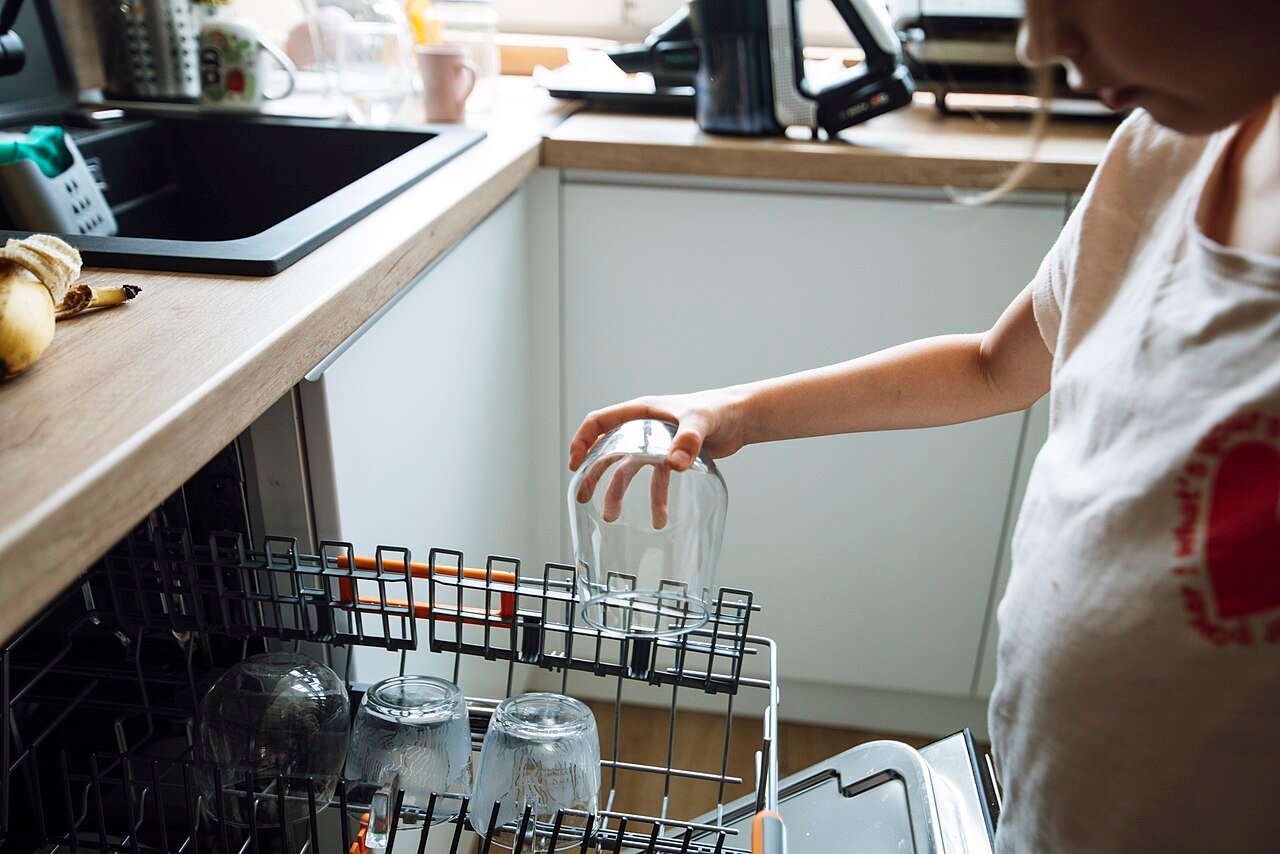
Safety first: Switch the dishwasher off at the wall before reaching inside. Wear gloves — standing water can hide broken glass.
Check 1 — Clean the filter
- Remove the bottom rack.
- Twist/lift out the filter assembly at the tub floor.
- Rinse under hot water, scrub the mesh with a soft brush.
- Refit securely — a loose filter causes its own problems.
Check 2 — Drain hose
- Pull the dishwasher out slightly (or open the under-sink cabinet).
- Follow the hose from dishwasher to sink/disposal.
- Look for kinks, sharp bends, or crushing.
- Make sure it loops up high under the counter before dropping to the drain — this high loop prevents backflow.
Check 3 — Air gap
That little chrome dome next to your faucet? Unscrew its cap and clean out gunk. A clogged air gap is a classic cause of slow draining.
Check 4 — Garbage disposal connection
If your dishwasher drains through a disposal: run the disposal, and check the knockout plug was removed during installation (common on new installs — it blocks the drain completely).
Check 5 — Run a reset + hot cycle
Cancel the cycle, start a fresh drain/rinse cycle with hot water. Sometimes the control just needs a reset.
<div class="safety"> <strong>🛑 Stop and call a pro if:</strong> <ul> <li>You hear humming but no water moves (pump/motor issue)</li> <li>There's an error code you can't clear</li> <li>Water leaks from underneath the unit</li> <li>You smell burning or see scorch marks</li> </ul> </div>
DIY vs pro cost
| Option | Typical cost |
|---|---|
| DIY (filter/hose/air gap) | $0 |
| Appliance repair visit | $120–$250 |
| Drain pump replacement | $200–$350 |
Printable checklist
- [ ] Power OFF at the wall
- [ ] Filter removed, cleaned, refitted
- [ ] Drain hose checked for kinks + high loop
- [ ] Air gap cleaned
- [ ] Disposal knockout plug checked
- [ ] Reset cycle run — draining now?