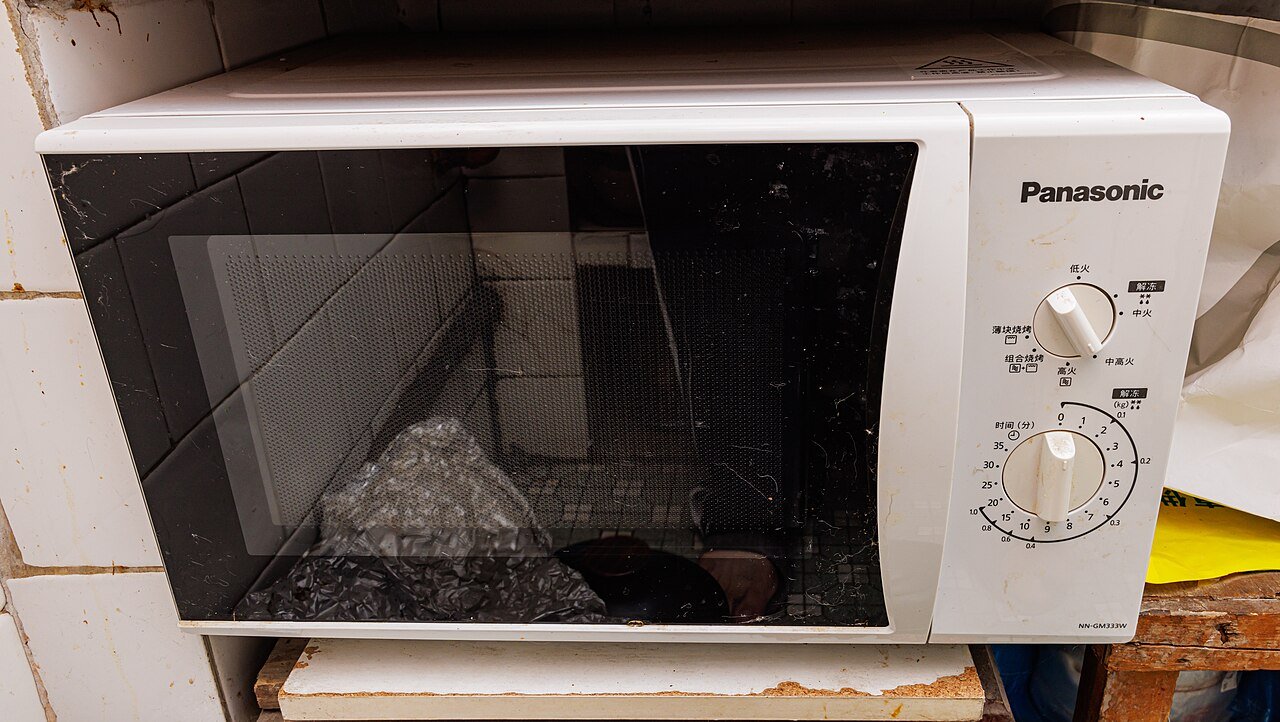
Quick answerPut a microwave-safe bowl of water with lemon slices or a splash of vinegar inside, run it on high for 5 minutes, then leave the door closed for 2–3 more minutes. The steam loosens all the splatter — open it up and wipe everything out with a cloth.
What you'll need
- Microwave-safe bowl (large — at least 4 cups)
- Water
- Lemon slices or 2 tablespoons white vinegar
- Dish soap
- Sponge or microfiber cloth
- Oven mitts
Step-by-step
- Fill the bowl. Water about three-quarters full, plus lemon slices or a splash of vinegar. The lemon mostly makes it smell good; the steam is what does the work either way.
- Microwave on high for 5 minutes. Put the bowl in and run it. You'll see the window fog up — that's the steam working. If your microwave is very dirty, the smell of old splatter heating up is normal.
- Leave the door closed for 2–3 minutes. Don't open it right away. The trapped steam keeps softening the grime while the bowl cools to a safer temperature. This waiting step makes the wiping dramatically easier.
- Remove the bowl carefully. Oven mitts — the bowl is full of near-boiling water and the bowl itself is scorching. Set it in the sink.
- Wipe the interior. Damp sponge or cloth, top to bottom: ceiling first (that's where the worst splatter hides), then walls, then floor. Most of it will come off with zero pressure. A drop of dish soap on the sponge handles anything greasy.
- Wash the turntable. Lift out the glass turntable and the roller ring. Wash them in the sink like dishes — they're the dirtiest part and the easiest to clean properly.
- Do the door and exterior. Wipe the inside of the door (including the seal edge where gunk collects), then the outside, the handle, and the control panel. Dry everything and put the turntable back.
<div class="safety"> <strong>🛑 Stop and call a pro if:</strong> <ul> <li>The microwave sparks during use, or the waveguide cover (the little mica panel inside) is burnt or damaged — that's a repair tech job, not a cleaning job.</li> <li>The door doesn't close properly or the seal is damaged — a microwave with a compromised door seal shouldn't be used.</li> <li>Never microwave sealed containers or anything metal. And unplug the unit before any deep cleaning around vents or the back panel.</li> </ul> </div>
DIY vs pro cost
| Option | Typical cost |
|---|---|
| DIY | $1–$3 |
| Replacement microwave | $80–$200 |
Printable checklist
- [ ] Large microwave-safe bowl, 3/4 full of water
- [ ] Lemon slices or vinegar added
- [ ] 5 minutes on high
- [ ] 2–3 minute steam rest with door closed
- [ ] Bowl removed with oven mitts
- [ ] Interior wiped top to bottom
- [ ] Turntable and roller ring washed in sink
- [ ] Door seal and exterior wiped
Related guides
- Dishwasher Smells Bad? How to Remove Dishwasher Odor Fast
- Washing Machine Not Draining? How to Fix It
- Dryer Not Heating? Troubleshooting Guide
Frequently asked questions
Can I use vinegar instead of lemon?
Yes — 2 tablespoons of white vinegar in the water works exactly the same. Lemon just smells nicer. Don't use both at once; there's no benefit and the smell combination is odd.
How do I get rid of a burnt smell in the microwave?
Run the steam method with lemon, then leave a bowl of baking soda inside overnight with the door closed. If the smell survives that, it's baked into the interior coating — usually from something that caught fire — and it may never fully leave.
How often should I clean the microwave?
A quick wipe weekly if you use it daily, and the full steam clean monthly or whenever you notice splatter. Covering food with a paper towel or lid prevents most of the mess in the first place.
Is it safe to clean with the microwave plugged in?
For this method, yes — you're just wiping the interior after steaming. Unplug it only if you're doing something more involved, like cleaning behind it or around the vents.
Advertisement