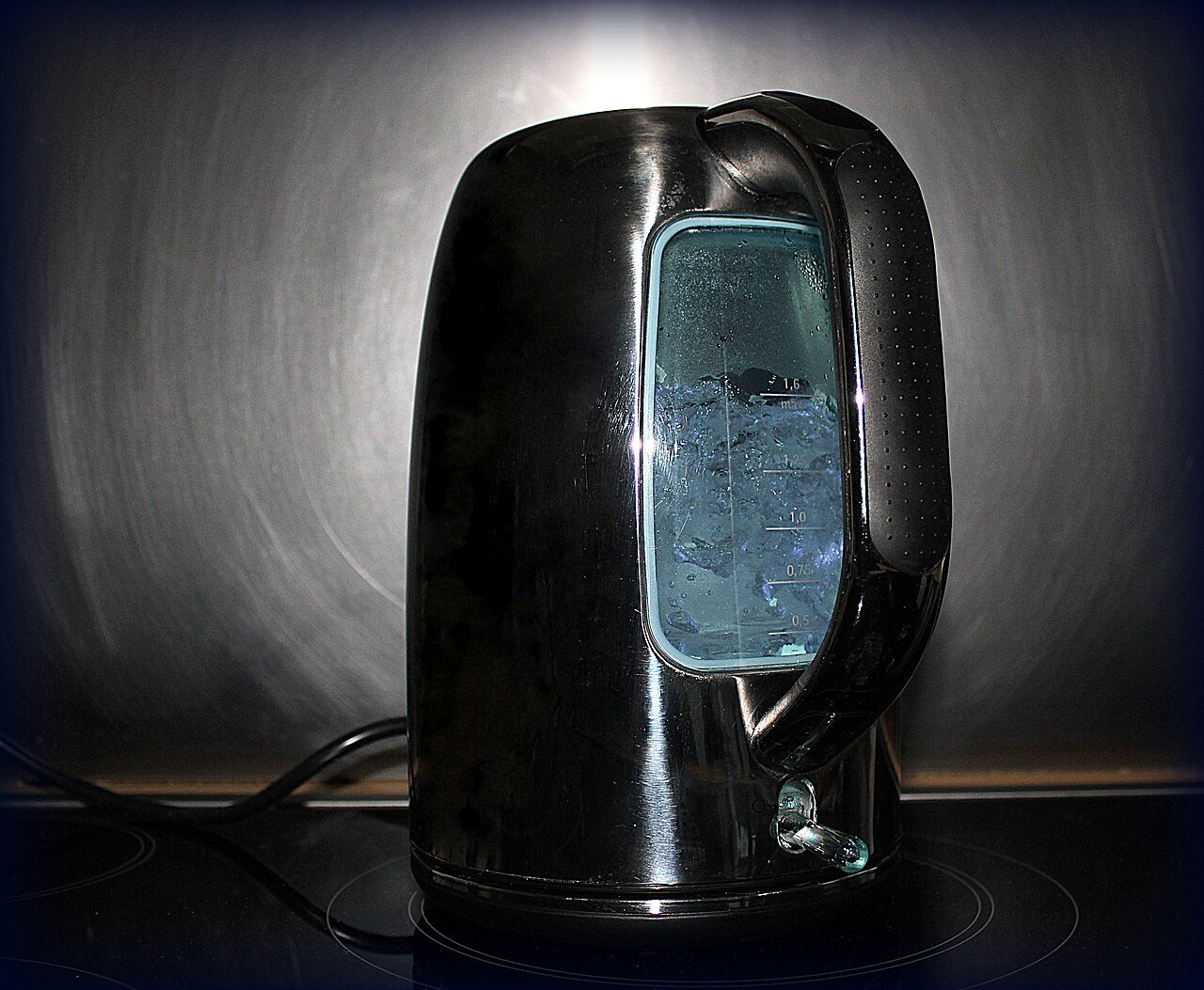
Quick answerFill the kettle halfway with water, add 1–2 tablespoons of citric acid (or equal parts water and white vinegar), boil it, and let it sit for 20–30 minutes. Pour it out, rinse well, then boil a full kettle of fresh water and discard it. The white crust is limescale, and the acid dissolves it.
What you'll need
- Citric acid powder (1–2 tablespoons) — or white vinegar
- Water
- Bottle brush or old toothbrush (for the spout)
- Soft cloth
Step-by-step
- Empty and unplug the kettle. Pour out any water. If it's electric, unplug it and keep the base completely dry throughout — you're descaling the inside, not washing the appliance.
- Mix the descaling solution. Best option: 1–2 tablespoons of citric acid in a half-full kettle of water. It has no smell and rinses clean. Alternative: half water, half white vinegar. Lemon juice works too but it's the weakest of the three.
- Boil it. Switch the kettle on and let it come to a full boil. You'll see fizzing around the scale — that's the acid reacting with the limescale. Don't walk away; a very scaled kettle can boil over with foam.
- Let it soak. Turn it off (or unplug) and leave the hot solution sitting for 20–30 minutes. For heavy buildup — thick white crust you can feel with a finger — leave it up to an hour. The heat plus time does the dissolving.
- Scrub the stubborn bits. Pour out the solution and look inside. Any remaining flakes around the waterline or in the spout filter can be scrubbed with a bottle brush or toothbrush. The spout mesh filter pops out on most kettles — rinse it separately.
- Rinse boil. Fill with fresh water, boil, and pour it away. Do this once for citric acid, twice if you used vinegar — nobody wants vinegary tea. Your kettle should now look clean inside and boil noticeably quieter.
- Set a schedule. In hard water areas (much of the UK, and parts of Australia and the US), descale monthly. In soft water areas, every 3–6 months is plenty. A kettle descaled regularly lasts years longer — limescale makes the element work harder and eventually kills it.
<div class="safety"> <strong>🛑 Stop and call a pro if:</strong> <ul> <li>The kettle leaks from the base or the handle area — that's an electrical appliance failing, not a cleaning issue. Replace it, don't repair it.</li> <li>Never submerge an electric kettle or get water into the base unit or charging contacts.</li> <li>Don't use bleach or harsh chemical descalers in a kettle — anything you can't fully rinse out ends up in your drinks. Food-safe acids only.</li> <li>Unplug the kettle before scrubbing inside, and let it cool enough to handle safely.</li> </ul> </div>
DIY vs pro cost
| Option | Typical cost |
|---|---|
| DIY | $1–$5 |
| New kettle | $25–$60 |
Printable checklist
- [ ] Kettle emptied and unplugged, base kept dry
- [ ] Citric acid (or vinegar) solution mixed
- [ ] Full boil completed
- [ ] 20–30 minute hot soak done
- [ ] Spout and filter scrubbed
- [ ] Rinse boil done (twice for vinegar)
- [ ] Monthly descale scheduled (hard water areas)
Related guides
- How to Remove Mold from Bathroom (Tiles, Grout, Caulk)
- How to Re-Caulk a Bathtub (No More Moldy Caulk)
- How to Remove Candle Wax from Carpet and Fabric
Frequently asked questions
Is limescale harmful to drink?
No. It's just calcium carbonate — the same mineral in hard water itself. It doesn't taste great and it wrecks appliances, but it's not a health hazard. Descaling is about taste and kettle lifespan, not safety.
Citric acid or vinegar — which is better?
Citric acid. It works faster, has no smell, and rinses out completely with one boil. Vinegar works fine but needs an extra rinse boil to clear the taste. A bag of food-grade citric acid costs a few dollars and lasts dozens of descales.
How do I know if I live in a hard water area?
White scale in the kettle is the giveaway — if you're reading this article, you probably do. In the UK, water companies publish hardness maps by postcode. White spots on glasses and stiff laundry are other signs.
Can I prevent limescale instead of descaling?
Not really, short of a water softener for the whole house. Using filtered water in the kettle slows buildup noticeably, though. Emptying the kettle after each use (rather than reboiling old water) helps a little too, since reboiled water concentrates the minerals.
Advertisement