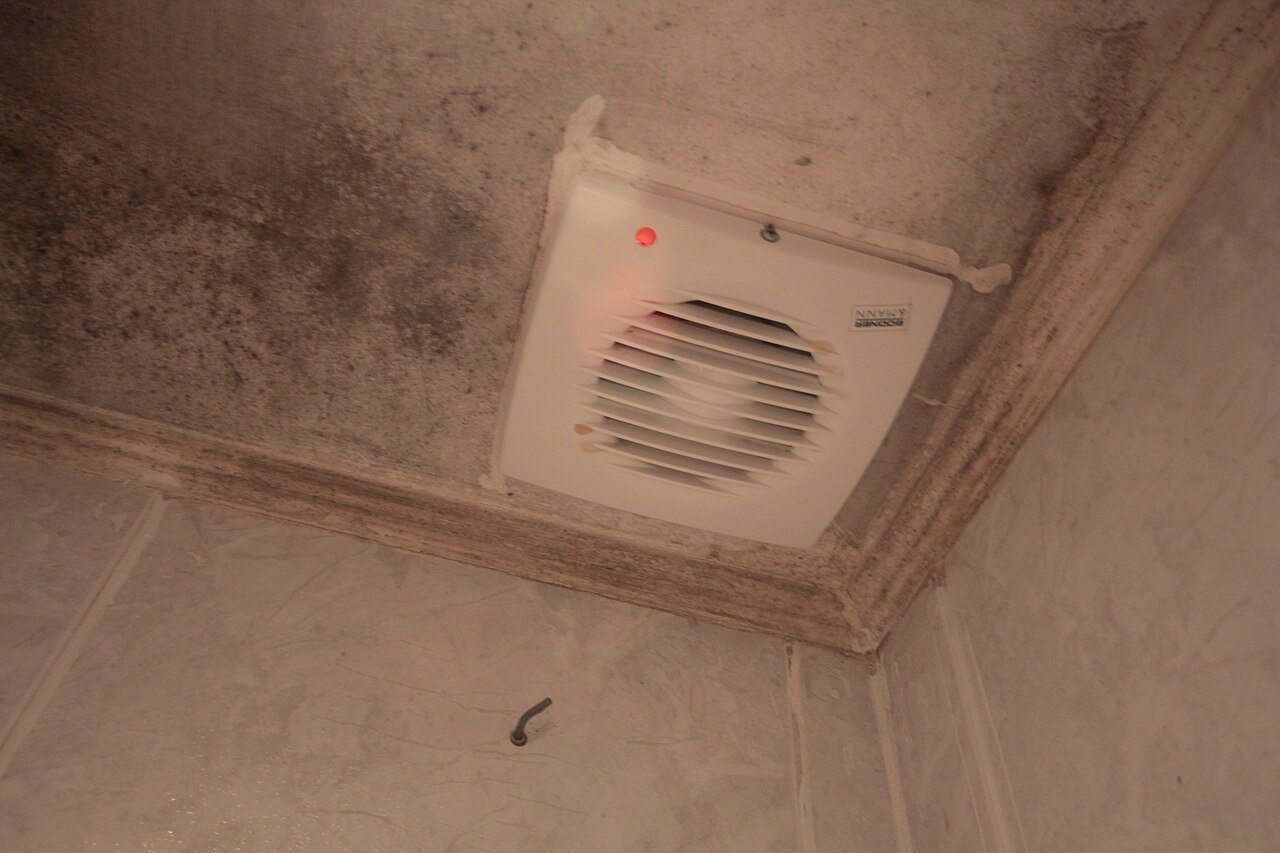
Quick answerPut on gloves and a mask and ventilate the room. Scrub the mold with dish soap and hot water, then spray with undiluted white vinegar or 3% hydrogen peroxide and let it sit. The critical part is fixing the moisture source afterward — usually poor ventilation — or it'll be back within weeks.
What you'll need
- Rubber gloves
- N95 or dust mask
- Dish soap
- White vinegar (undiluted) in a spray bottle
- 3% hydrogen peroxide in a spray bottle (alternative to vinegar)
- Stiff brush and an old toothbrush for grout lines
- Microfiber cloths
- Caulk remover tool and mold-resistant silicone caulk (only if recaulking)
Step-by-step
- Gear up and ventilate. Gloves and a mask — mold spores aren't something to breathe in casually. Open a window and run the bathroom fan. If there's no fan at all, you've found part of your mold problem.
- Measure the patch. Roughly is fine. If the total moldy area is bigger than about 10 square feet (think a 3×3 ft patch), stop — that's professional remediation territory. Mold you can smell but can't see, like inside walls, is also a pro job.
- Scrub with soap and water first. Dish soap, hot water, brush. This removes the surface growth and the grime it's feeding on. Rinse the brush often. Don't dry-scrub mold — that just launches spores into the air.
- Disinfect with vinegar OR peroxide — pick one. Spray undiluted white vinegar over the area and leave it for an hour, or spray 3% hydrogen peroxide and leave it for 10 minutes. Both kill most household mold. Never use them with bleach or with each other in the same session.
- Attack the grout lines. Grout is porous, so mold roots go deep. The old toothbrush is for this. If grout stays stained after two rounds, the mold is inside the grout itself — you can regrout those lines, or accept the stain (a stain with no active mold is cosmetic, not a health issue).
- Check the caulk. Mold that keeps returning along the tub or shower edge is usually living behind failing caulk. Scrape out the old caulk, clean the gap underneath, let it dry completely, and recaulk with a mold-resistant silicone.
- Dry everything. Wipe down, then leave the fan running for at least 30 minutes. Mold needs moisture — a dry bathroom is a mold-free bathroom.
- Fix the cause. Run the fan during every shower and for 20 minutes after. Squeegee the shower walls when you finish. If there's no exhaust fan, installing one is the single best upgrade you can make against mold.
<div class="safety"> <strong>🛑 Stop and call a pro if:</strong> <ul> <li>The mold covers more than about 10 sq ft, or you can smell it but can't find it (likely inside walls or under flooring).</li> <li>Anyone in the house has asthma, severe allergies, or a weakened immune system — don't DIY mold removal, hire it out.</li> <li>You see mold on drywall that's soft, crumbling, or discolored through — the material needs replacing, not cleaning.</li> <li>Never mix bleach with vinegar, ammonia, or any acid cleaner. The fumes can cause serious lung damage.</li> </ul> </div>
DIY vs pro cost
| Option | Typical cost |
|---|---|
| DIY | $10–$25 |
| Pro mold remediation | $500–$2,000+ |
Printable checklist
- [ ] Gloves and mask on, fan running, window open
- [ ] Moldy area confirmed under 10 sq ft
- [ ] Scrubbed with dish soap and hot water
- [ ] Treated with vinegar OR peroxide (never bleach-mixed)
- [ ] Grout lines scrubbed with toothbrush
- [ ] Failing caulk scraped out and replaced
- [ ] Everything fully dried, fan left running
- [ ] Fan-during-shower habit started
Related guides
- How to Re-Caulk a Bathtub (No More Moldy Caulk)
- How to Remove Candle Wax from Carpet and Fabric
- How to Descale a Kettle (Hard Water Areas)
Frequently asked questions
Is bleach or vinegar better for bathroom mold?
For grout and caulk, vinegar or hydrogen peroxide — they penetrate porous surfaces where bleach can't reach the roots. Bleach is fine on hard, non-porous surfaces like glazed tile, but it needs good ventilation and must never be mixed with other cleaners.
Is black mold dangerous?
Color doesn't determine danger. "Black mold" (Stachybotrys) gets the headlines, but any large mold growth can irritate lungs and trigger allergies. Small patches cleaned properly aren't an emergency; large growths or mold inside walls need a pro regardless of color.
Why does the mold keep coming back?
Because the moisture is still there. Cleaning kills what's visible, but if the bathroom stays damp — no fan, door always closed, a slow leak — mold returns. Ventilation is the actual cure; cleaning is just treating the symptom.
Can I just paint over mold with mold-resistant paint?
Only after the mold is fully removed and the surface is bone dry. Painting over active mold seals it in and it grows straight through. The paint helps prevent future growth on clean surfaces — it doesn't fix existing mold.
Advertisement