What you'll need
- Rubber gloves
- Needle-nose pliers or an old toothbrush
- Bucket (if you go as far as the P-trap)
- Plastic zip drain tool ($3–$5, optional but handy)
- Baking soda and white vinegar (optional, for a finishing flush)
- Old towels
Step-by-step
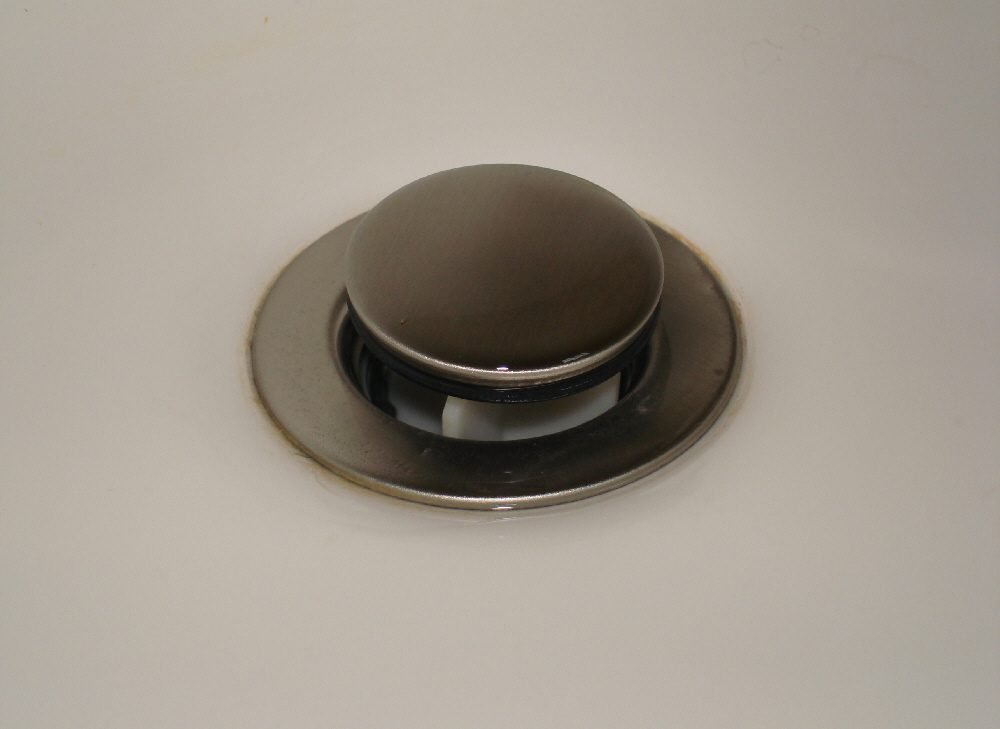
- Start with the stopper. Most pop-up stoppers lift straight out; some unscrew counterclockwise, and a few are held by a pivot rod underneath (squeeze the spring clip to release it). This is where the clog lives 90% of the time.
- Clean the stopper thoroughly. Pull off the matted hair, soap scum, and toothpaste residue wrapped around it. An old toothbrush gets into the grooves. You'll be mildly horrified — that's normal, and that's the clog.
- Clean the drain opening. With the stopper out, reach into the drain mouth with the toothbrush or a rag and wipe the gunk ring just inside. Shine a flashlight down — if you see more hair just out of reach, grab it with the pliers.
- Go deeper with a zip tool if needed. If drainage is still slow, feed a plastic zip tool (those barbed strips) down the drain, wiggle it, and pull it out slowly. It grabs hair from the first several inches where fingers can't reach. A straightened wire hanger works in a pinch.
- Flush with hot tap water. Run the hottest water from the tap for a couple of minutes. Use hot tap water, not a kettle of boiling water — boiling water can crack porcelain sinks and damage PVC pipe joints.
- Optional: baking soda and vinegar finish. Pour half a cup of baking soda down the drain, follow with half a cup of vinegar, let it fizz for 15 minutes, then flush with hot water. It's mild — it won't dissolve a real clog, but it freshens things up after the mechanical cleaning.
- If still slow: check the P-trap. Put the bucket under the curved P-trap beneath the sink, unscrew the slip nuts by hand (they're designed to loosen without tools), and dump out the trap. Clear any sludge, rinse it, and reinstall — hand-tighten the nuts, then a small snug with pliers. Don't overtighten plastic nuts; they crack.
- Test and prevent. Fill the basin and release it — it should drain briskly. Going forward, a $3 mesh drain strainer catches hair before it starts, and wiping toothpaste residue instead of rinsing it all down the drain slows buildup considerably.
<div class="safety"> <strong>🛑 Stop and call a pro if:</strong> <ul> <li>Multiple sinks or the tub are also draining slowly — a single slow sink is a local clog, but several at once suggests a branch or main line issue.</li> <li>The P-trap or drain pipes are corroded and crumble when touched — old metal traps can disintegrate, and then you're into pipe replacement.</li> <li>Water backs up into the sink from below when other fixtures drain — that signals a blockage deeper in the system, potentially the sewer line.</li> <li>There's a sewage smell that doesn't go away after cleaning — the trap may not be holding water (a venting problem) or there's a leak you can't see.</li> </ul> </div>
DIY vs pro cost
| Option | Typical cost |
|---|---|
| DIY | $0–$10 |
| Pro visit | $120–$250 |
A plumber will do exactly what this guide describes — pull the stopper, clear the hair, maybe pop the trap — and charge a service minimum for it. Twenty minutes of your time versus a $150 bill.
Printable checklist
- [ ] Pop-up stopper removed (lift, unscrew, or release pivot rod)
- [ ] Hair and scum cleaned off the stopper completely
- [ ] Drain mouth wiped clean just inside the opening
- [ ] Zip tool used for deeper hair if still slow
- [ ] Hot tap water flush (not boiling) for 2 minutes
- [ ] P-trap removed, emptied, and reinstalled if needed
- [ ] Basin fill-and-release test drains briskly
- [ ] Mesh strainer placed to prevent the next clog