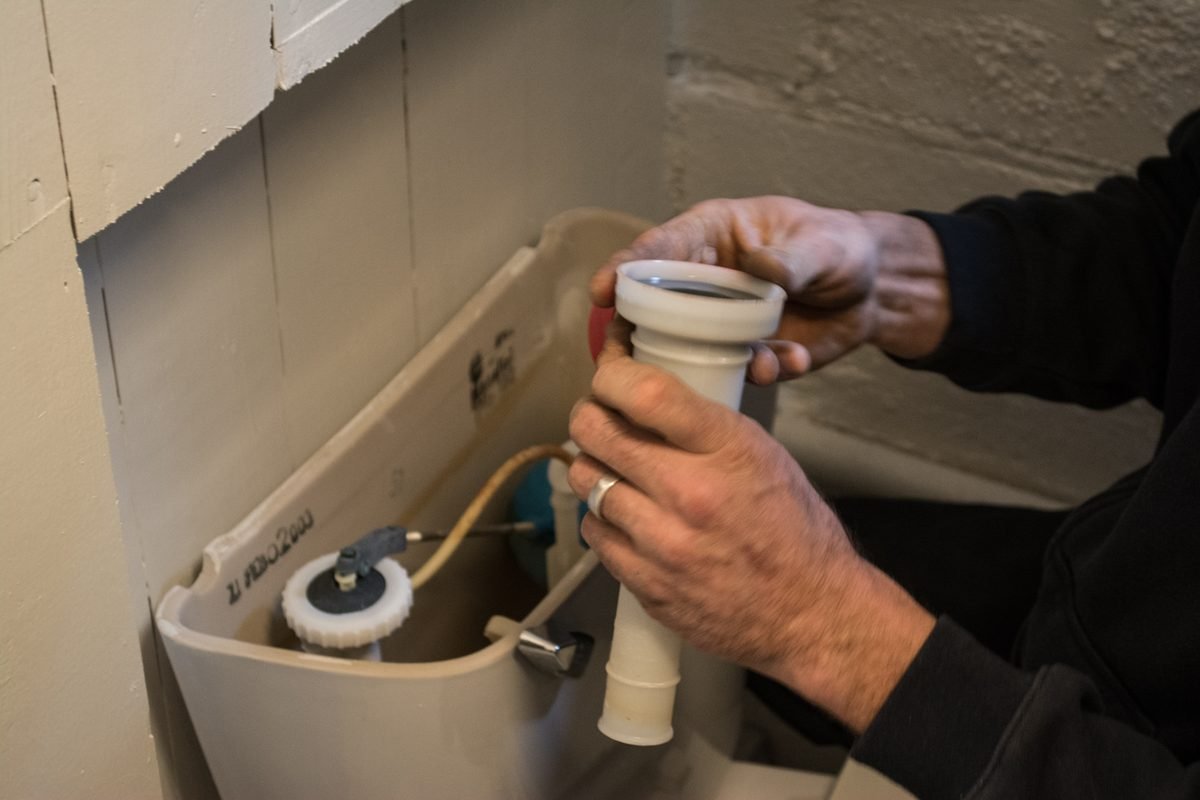
Quick answerTurn off the water, flush to drain the tank, unhook the old flapper from the overflow tube, and snap the new one on. The rubber flapper is the single most-replaced toilet part because it sits in water 24/7 and degrades every few years. Fifteen minutes and about five dollars.
What you'll need
- Replacement flapper ($5–$12 — match the size: 2-inch is most common, some newer toilets use 3-inch)
- Rubber gloves
- Sponge and an old towel
- Your phone (take a photo of the old setup before removing it)
Step-by-step
- Figure out your flapper size. Look at the drain opening at the bottom of the tank where the flapper sits. Measure across it: about 2 inches (5 cm) is standard; about 3 inches (7.6 cm) means you need the larger size. When in doubt, bring the old flapper to the store to match it.
- Shut off the water. Turn the supply valve behind the toilet clockwise — gently. Old valves can be stiff, and a snapped valve turns a $5 job into an emergency.
- Drain the tank. Flush, holding the handle down to empty as much as possible, then sponge out the remainder. You want to work dry.
- Remove the old flapper. Unhook the chain from the flush lever, then slide the flapper's side arms off the two pegs on the overflow tube. Note how it was positioned — your phone photo helps here.
- Install the new flapper. Slide its arms onto the same pegs, making sure it sits centered and flat over the drain opening. Hook the chain to the flush lever arm.
- Set the chain slack. You want about ½ inch (1 cm) of slack when the flapper is closed. Too tight and the flapper can't seal; too much slack and the chain gets caught underneath it. Most chains have multiple links — just re-hook at the right one.
- Turn the water on and test. Let the tank fill, then flush three times. Watch the flapper: it should lift cleanly, drop straight back down, and seal with no ripples or hissing afterward.
- Confirm with a dye test. Drop food coloring in the tank, wait 20 minutes without flushing. No color in the bowl means the new flapper is sealing perfectly.
<div class="safety"> <strong>🛑 Stop and call a pro if:</strong> <ul> <li>The shut-off valve is frozen, corroded, or starts leaking when touched — forcing it can snap the stem and leave water pouring with no shutoff.</li> <li>The tank bolts or the flush valve seat are visibly corroded — a new flapper can't seal against a pitted, crumbling seat.</li> <li>You spot a crack in the tank porcelain — tanks under pressure from a full water load can fail suddenly; that's a replacement job.</li> </ul> </div>
DIY vs pro cost
| Option | Typical cost |
|---|---|
| DIY | $5–$12 |
| Pro visit | $150–$225 |
This is the textbook example of a repair that's all labor markup — the part costs less than a coffee. No plumber needed unless the shutoff valve or tank hardware is compromised.
Printable checklist
- [ ] Flapper size confirmed (2-inch vs 3-inch) before buying
- [ ] Phone photo taken of the old flapper position
- [ ] Water shut off gently at the supply valve
- [ ] Tank flushed and sponged dry
- [ ] New flapper seated flat on the overflow tube pegs
- [ ] Chain re-hooked with ~½ inch of slack
- [ ] Three test flushes — clean lift, clean seal, no hissing
- [ ] Dye test confirms no leak after 20 minutes
Related guides
- How to Fix a Running Toilet (Stop the Phantom Flush)
- How to Unclog a Toilet Without Calling a Plumber
Frequently asked questions
How do I know if my flapper is 2-inch or 3-inch?
Measure the drain opening it covers at the bottom of the tank. Around 2 inches (5 cm) is the standard size in most toilets; around 3 inches (7.6 cm) is common in newer high-efficiency models. Bringing the old one to the store is the foolproof method.
How often should a toilet flapper be replaced?
Every few years is normal — rubber sitting in chlorinated water 24/7 degrades, warps, and gets slimy. If your toilet starts phantom-flushing (running briefly on its own), the flapper is the first suspect.
Do "universal" flappers actually work?
Usually, yes — most universal flappers include adapters for both common sizes and fit the majority of toilets. But a flapper made for your toilet's brand seals more reliably, so match the size at minimum and the brand if it's easy.
The new flapper still leaks — what did I do wrong?
Check three things: the chain isn't too tight or tangled, the flapper is centered on the drain (not sitting crooked), and the drain seat itself is clean and smooth. Mineral buildup or a warped seat will defeat even a brand-new flapper.
Advertisement