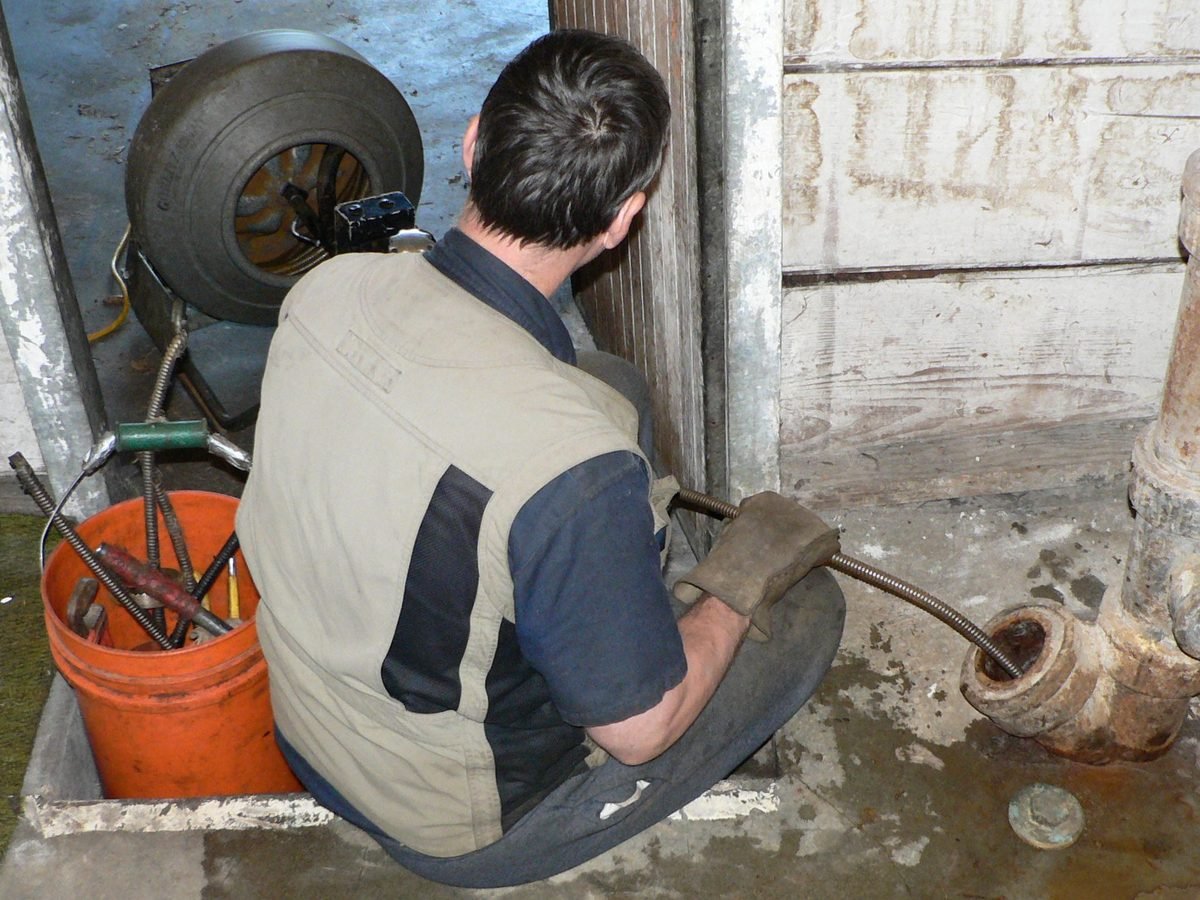
What you'll need
- Hand-crank drain auger, 25 ft (7.6 m) — $25–$40
- Rubber gloves (the retrieved clog is unpleasant)
- Bucket and old towels
- Flashlight
- Old toothbrush (for cleaning the stopper and drain rim)
Step-by-step
- Remove the stopper or strainer. Pop-up stoppers usually lift out or unscrew; tub strainers may need a screwdriver. You need a clear path for the cable — snaking past a stopper just tangles things.
- Feed the cable by hand first. Push the auger cable into the drain manually until you feel it hit resistance — that's either the clog or a pipe bend. Don't crank yet; hand-feeding tells you what you're dealing with.
- Lock the cable and start cranking. Tighten the thumbscrew on the auger drum to lock the cable, then crank clockwise while pushing gently forward. Clockwise is the direction that keeps the cable from unscrewing its own tip inside the pipe.
- Work through the resistance. When the tip reaches the clog, you'll feel it bite. Keep cranking with light forward pressure — let the corkscrew tip chew through or snag the blockage rather than ramming it. If the cable starts kinking or binding hard, stop.
- Retract slowly. Loosen the thumbscrew slightly and pull the cable back while continuing to crank slowly. The clog (usually a lovely wad of hair and soap) often comes out wrapped around the tip. Have the bucket ready.
- Flush with hot water. Run the hottest tap water for a couple of minutes to wash away loosened debris. If drainage is still slow, run the auger through a second time — some clogs need two passes.
- Reinstall the stopper and test. Put everything back, fill the basin, and let it drain. It should empty briskly with no gurgling. Gurgling can mean a vent issue rather than a clog.
- Clean and dry the auger. Rinse the cable, wipe it down, and let it dry fully before storing — a damp cable rusts in the drum and becomes useless. A light spray of silicone lubricant on the cable keeps it feeding smoothly next time.
<div class="safety"> <strong>🛑 Stop and call a pro if:</strong> <ul> <li>Multiple fixtures are backing up at once (toilet gurgles when the sink drains, water comes up in the shower) — that's a main sewer line blockage, and it can push sewage into the house.</li> <li>You recently poured chemical drain cleaner down this drain — the auger can splash caustic liquid back at you. Wear eye protection and gloves, and warn anyone else working on it.</li> <li>The cable won't advance past a few feet no matter what you try — you may be hitting a broken pipe, a collapsed section, or a sharp turn the cable can't make.</li> <li>Your home has very old pipes (lead, Orangeburg, or crumbling cast iron) — an auger can punch through deteriorated pipe walls.</li> </ul> </div>
DIY vs pro cost
| Option | Typical cost |
|---|---|
| DIY | $25–$40 |
| Pro visit | $150–$350 |
A hand auger pays for itself on the first use and lives in your toolbox for a decade. Pros charge a service minimum for the same 20 minutes of cranking.
Printable checklist
- [ ] Stopper/strainer removed for a clear path
- [ ] Cable hand-fed until first resistance felt
- [ ] Thumbscrew locked, cranking clockwise only
- [ ] Gentle forward pressure — no ramming
- [ ] Cable retracted slowly, clog retrieved into bucket
- [ ] Hot water flush for 2 minutes after clearing
- [ ] Second pass done if drainage still slow
- [ ] Auger rinsed, dried, and lightly lubricated before storing