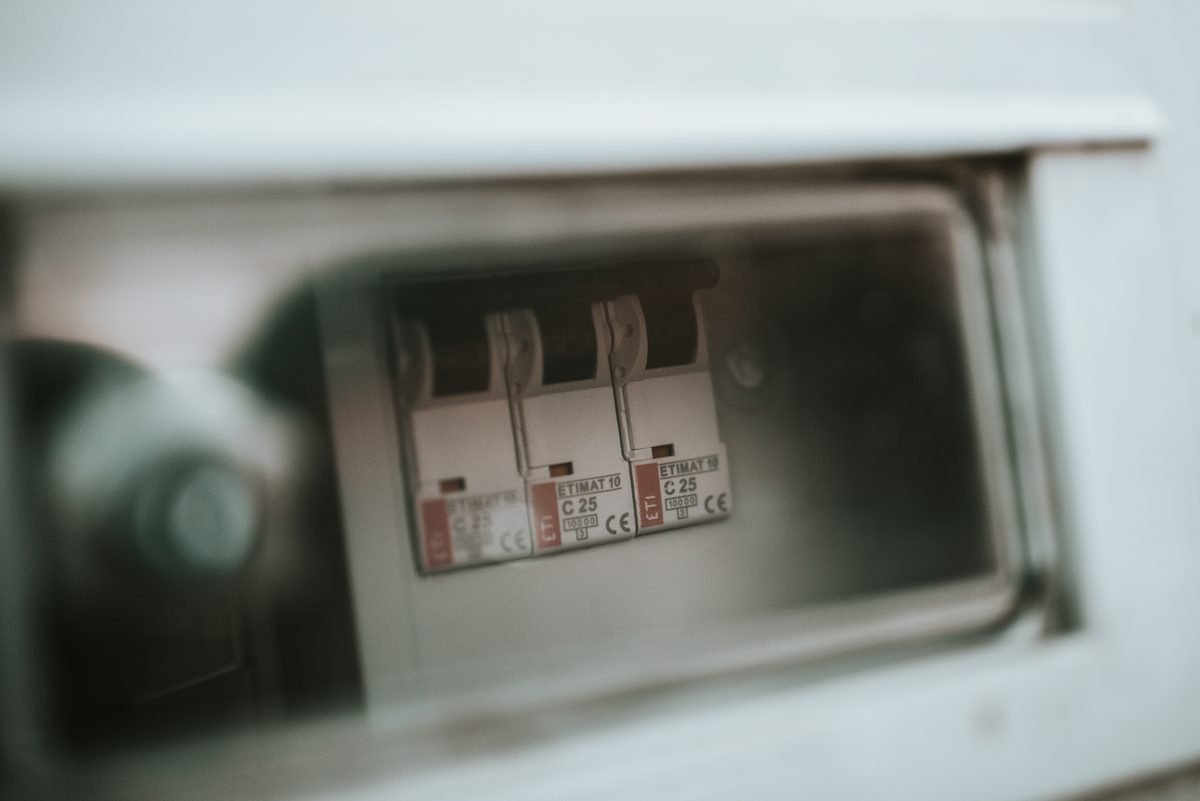
Quick answerUnplug everything on the circuit, reset the breaker, then plug things back one at a time. The thing that trips it is your culprit — usually an overloaded circuit or a faulty appliance. If it trips with nothing plugged in, that's an electrician's job.
What you'll need
- Flashlight (breaker boxes live in dark corners)
- Notepad or phone (to track what trips it)
- Patience — this is detective work, not wrench work
Step-by-step
- Turn off the breaker and leave it off while you investigate. Go to your breaker panel (consumer unit in the UK) and switch the tripping breaker fully to OFF. If it was sitting in the middle "tripped" position, push it all the way off first, then back on when you're ready to test — breakers need that full reset.
- Unplug everything on that circuit. Walk the house and unplug every single thing on the affected circuit — lamps, chargers, space heaters, the lot. Don't just switch them off; unplug them. A faulty device can draw current even when "off."
- Reset the breaker with everything unplugged. Flip it firmly to ON. If it holds, the wiring is probably fine and the problem is something you had plugged in. If it trips immediately with nothing connected, stop — that's a wiring fault or a bad breaker, and you need an electrician.
- Plug things back in one at a time. Start with the smallest loads. After each item, wait a minute. When the breaker trips, the last thing you plugged in is your prime suspect.
- Check for the usual overload suspects. Space heaters (1,500W each), hair dryers, microwaves, and window AC units are the classic circuit-killers. Two high-draw appliances on one 15-amp circuit will trip it every time. The fix isn't a bigger breaker — it's moving one appliance to a different circuit.
- Test the suspect appliance elsewhere. Plug it into a different circuit. If it trips that breaker too, the appliance is faulty — repair or replace it. If it runs fine elsewhere, your original circuit is overloaded and you need to redistribute the load.
- Look at the breaker itself. A breaker that trips randomly with normal loads, feels hot, or won't stay reset may just be worn out. Replacing a breaker is a quick job for an electrician — but panels can stay partially live, so this is not a DIY first-timer task.
- Note the pattern. Does it trip when it rains? When the AC kicks on? At the same time every evening? Patterns point to causes — moisture getting into an outdoor outlet, a failing compressor, or a neighbor's... well, usually your own overloaded evening routine.
<div class="safety"> <strong>🛑 Stop and call a pro if:</strong> <ul> <li>The breaker trips with absolutely nothing plugged in — likely a short or ground fault in the wiring.</li> <li>You smell burning, see scorch marks around outlets, or the panel feels hot.</li> <li>The breaker is buzzing, sparking, or physically damaged.</li> <li>It's an older panel (Federal Pacific, Zinsco, or fuse box) — these have known safety issues beyond a simple trip.</li> <li>You see aluminum wiring or there's no ground wire in the system — call an electrician before doing any electrical work.</li> <li>Anyone has felt a shock or tingling from outlets, switches, or appliances — stop and call an electrician immediately.</li> </ul> </div>
DIY vs pro cost
| Option | Typical cost |
|---|---|
| DIY | $0 (redistributing loads is free) |
| Pro visit | $100–$200 (diagnosis); $150–$300 if a breaker needs replacing |
Printable checklist
- [ ] Tripping breaker identified and switched fully OFF
- [ ] Everything on the circuit unplugged (not just switched off)
- [ ] Breaker reset with zero load — holds or trips?
- [ ] Devices plugged back one at a time, culprit identified
- [ ] High-draw appliances moved to separate circuits
- [ ] Suspect appliance tested on a different circuit
- [ ] Pattern noted (weather, time of day, specific appliance)
Related guides
- How to Replace a Light Switch Safely (Step-by-Step)
- How to Install a Dimmer Switch (30-Minute Guide)
- How to Replace an Electrical Outlet (Socket)
Frequently asked questions
Is it safe to keep resetting a tripping breaker?
Once or twice while diagnosing, yes. As a habit, no. A breaker trips because something is wrong — repeatedly resetting it lets the underlying problem get worse. Find the cause first.
Can I just replace the breaker with a bigger one so it stops tripping?
No — this is genuinely dangerous. The breaker size protects the wire in your walls. A 20-amp breaker on 15-amp wiring lets the wire overheat before the breaker trips, which is how electrical fires start.
What's the difference between a breaker tripping and a GFCI tripping?
A breaker trips on overload or short circuit — too much current. A GFCI trips on ground faults — current leaking where it shouldn't, like through water or a person. If a GFCI outlet keeps tripping, unplug everything downstream and reset; if it still trips empty, the GFCI itself may be bad.
Advertisement