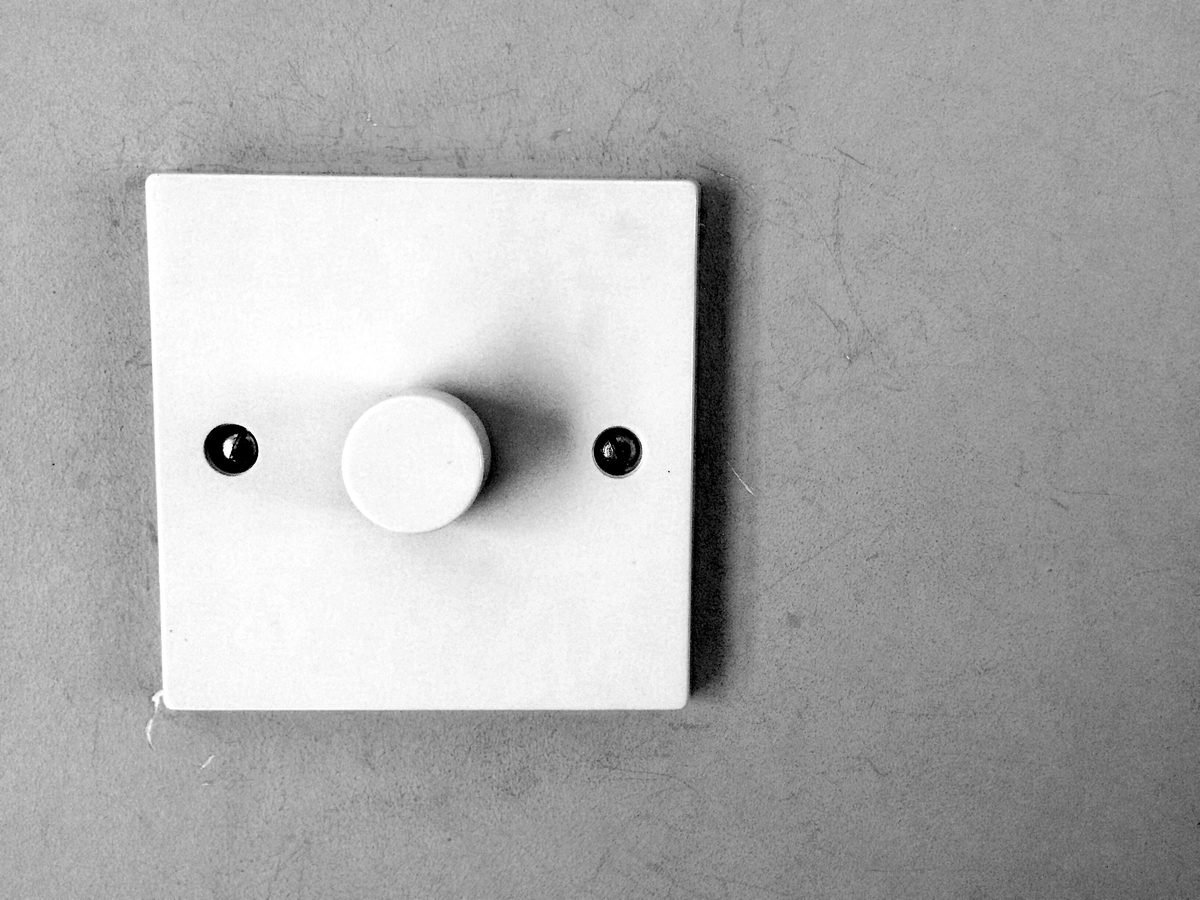
Quick answerKill the breaker, swap the old switch for a dimmer rated for your bulb type (LED dimmers for LED bulbs), connect ground, and set the low-end trim so bulbs don't flicker. Most of the job is identical to replacing a regular switch.
What you'll need
- Dimmer switch matched to your bulbs ($15–$40; LED-rated if you have LEDs)
- Non-contact voltage tester
- Screwdrivers (flathead + Phillips)
- Wire strippers
- Wire nuts (usually included with the dimmer)
- Electrical tape
Step-by-step
- Turn off the breaker. Same as any switch job — breaker OFF at the panel (consumer unit in the UK), and verify dead with your voltage tester before touching a wire.
- Check your bulbs first. This is the step people skip and regret. If you have LED bulbs, you need an LED-compatible dimmer (sometimes labeled "CL" or "LED+"). Old dimmers designed for incandescent bulbs will make LEDs flicker, buzz, or refuse to dim. Check the bulb box or the manufacturer's compatibility list.
- Remove the old switch. Cover plate off, mounting screws out, pull the switch forward. Take a photo of the wiring, then disconnect the wires. Note which wire went where.
- Check the box size. Dimmers are deeper than regular switches — the electronics need room. If the box is shallow and crammed, you may need a deeper box (that's electrician territory in some areas). Most standard boxes fit fine.
- Wire the dimmer. Dimmers usually have wire leads instead of terminal screws: black to black (line), the other lead to the load wire going to the light, green to ground. Twist connections tight with wire nuts, then tug each one — if it pulls loose, redo it. Cap any unused leads per the instructions.
- Set the low-end trim. Many LED dimmers have a small adjustment dial or button sequence that sets the minimum dim level. This stops bulbs from flickering or cutting out at low settings. Do this before you button everything up — it's much easier with the switch out of the wall.
- Mount and test. Fold wires in gently, screw the dimmer to the box, attach the cover plate (dimmers often need their own plate — check the box). Breaker on, test full range from bright to dim.
- Listen and watch. Run the dimmer through its full range. Buzzing from the switch or flickering bulbs means a compatibility problem — recheck the bulb/dimmer match.
<div class="safety"> <strong>🛑 Stop and call a pro if:</strong> <ul> <li>You smell burning or see scorch marks when you open the box — that's a fire risk, not a DIY moment.</li> <li>There's aluminum wiring or no ground wire present.</li> <li>The circuit also feeds outlets or appliances, not just lights — dimmers don't belong on mixed circuits.</li> <li>You're trying to dim a ceiling fan or fluorescent fixture — wrong device entirely, and a fire hazard with the wrong dimmer.</li> <li>You feel any tingling or get a shock from the switch or box — stop immediately, that's an electric shock risk.</li> </ul> </div>
DIY vs pro cost
| Option | Typical cost |
|---|---|
| DIY | $15–$40 (dimmer; tester extra if needed) |
| Pro visit | $100–$175 (often bundled with other small jobs) |
Printable checklist
- [ ] Breaker OFF, power verified dead with tester
- [ ] Dimmer rated for your bulb type (LED vs incandescent)
- [ ] Photo of original wiring taken
- [ ] Wire nuts tight — tug-tested
- [ ] Low-end trim adjusted before closing up
- [ ] Full dim range tested, no buzzing or flicker
- [ ] Correct cover plate installed
Related guides
- How to Replace a Light Switch Safely (Step-by-Step)
- How to Replace an Electrical Outlet (Socket)
- Lights Flickering in House? 7 Causes and How to Fix Them
Frequently asked questions
Why do my LED bulbs flicker with the new dimmer?
Almost always a compatibility issue — either the dimmer isn't LED-rated or the bulbs aren't dimmable (check the bulb packaging for "dimmable"). Try adjusting the dimmer's low-end trim first; if that doesn't fix it, swap bulbs for ones on the dimmer maker's compatibility list.
Can I put a dimmer on a three-way switch setup?
Yes, but you need a three-way dimmer, and only one of the two switches gets replaced with the dimmer — the other stays a regular three-way switch. Wire it exactly per the dimmer's diagram, which differs from a standard three-way.
Is it normal for a dimmer switch to feel warm?
Yes, mildly warm is normal — dimmers dissipate heat as part of how they work. Hot to the touch is not normal and means it's overloaded or failing; turn the breaker off and replace it.
Do dimmers save energy?
With incandescent bulbs, dimming genuinely cut power use. With LEDs, the savings are tiny since LEDs sip power anyway — you're dimming for ambience, not your electric bill.
Advertisement