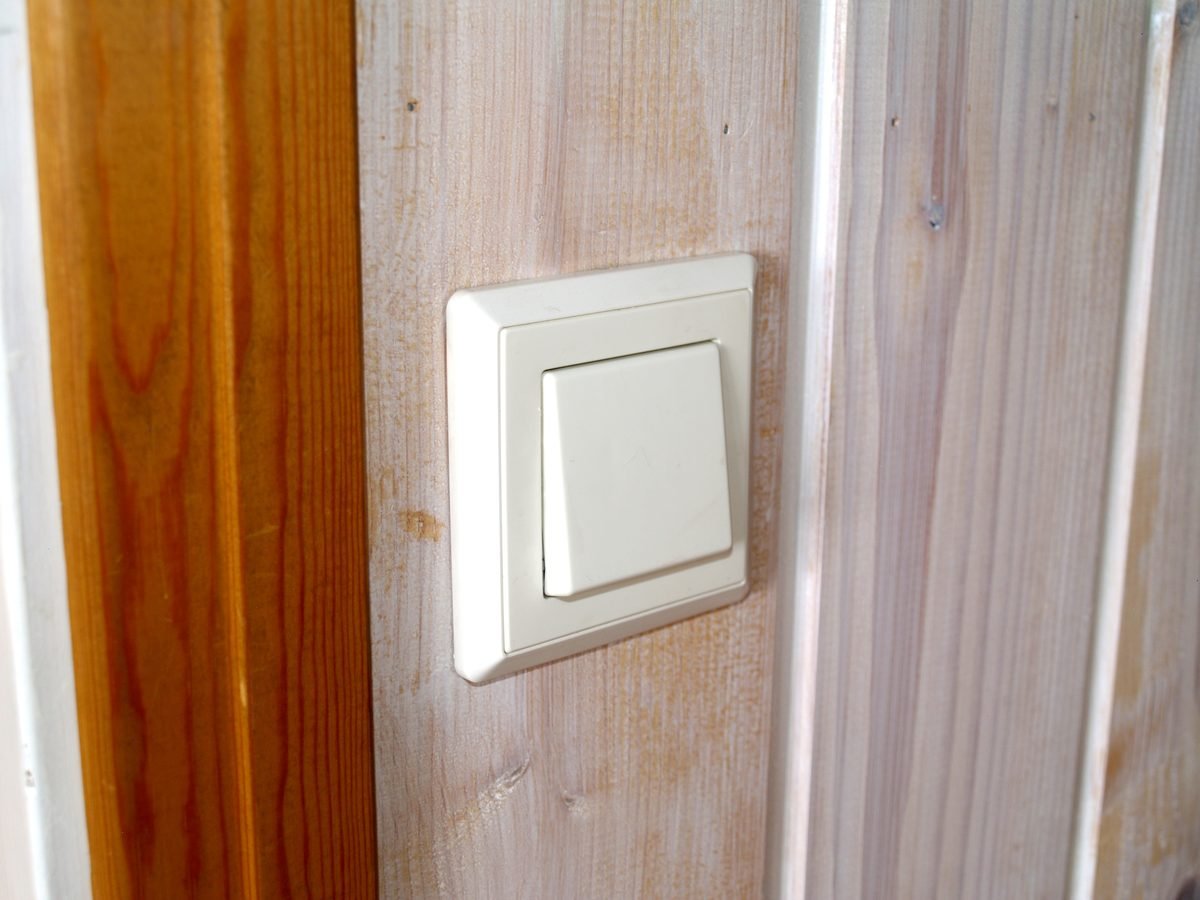
Quick answerTurn off the breaker first, then unscrew the old switch, move one wire at a time to the same terminals on the new switch, and test with a voltage tester before touching anything. It's a 20-minute job that costs under $15 in parts.
What you'll need
- New single-pole light switch ($3–$8)
- Non-contact voltage tester ($12–$20 — worth owning forever)
- Flathead and Phillips screwdrivers
- Wire strippers (optional but handy)
- Electrical tape
- Headlamp or flashlight
Step-by-step
- Turn off the breaker. Find your breaker box (or consumer unit, if you're in the UK) and flip the breaker for that switch to OFF. Tape it off or tell everyone in the house to leave it alone. This is the one step you never skip.
- Confirm the power is actually dead. Flip the switch a few times — the light should stay off. Then hold your non-contact voltage tester against each wire in the box after you open it. No beep, no light, no power. Testers can fail, so check it on a known live outlet first to make sure it works.
- Remove the cover plate and old switch. Unscrew the cover plate, then unscrew the two mounting screws holding the switch to the box. Pull the switch gently out of the box so you can see the wiring.
- Take a photo before touching anything. Seriously — one clear photo of which wire goes to which screw saves you if you get confused mid-job. You'll thank yourself.
- Disconnect the old switch. Loosen the terminal screws and free the wires. Note: there are usually two black (hot) wires on a single-pole switch — one brings power in, one carries it to the light. The green or bare copper wire is ground. If you see aluminum wiring (dull silver instead of copper), stop and call an electrician — aluminum needs special connectors.
- Connect the new switch. Move wires one at a time from the old switch to the matching terminals on the new one. Black wires go to the brass/dark screws, ground to the green screw. Tighten firmly — a loose connection is what causes arcing and heat. Wrap a loop of electrical tape around the switch body covering the terminals for extra safety.
- Mount it back in the box. Carefully fold the wires back into the box (don't crush them), screw the switch to the box, then attach the cover plate.
- Turn the breaker back on and test. Flip the breaker on, then flip the switch. Light works? You're done. If not, breaker back OFF and recheck your connections.
<div class="safety"> <strong>🛑 Stop and call a pro if:</strong> <ul> <li>The voltage tester still beeps with the breaker off — you may have the wrong breaker or a wiring fault.</li> <li>You see aluminum wiring, cloth-covered wires, or no ground wire in the box.</li> <li>The box is cracked, scorched, or smells like burning plastic.</li> <li>There are more than three wires and you can't tell which is which — that's likely a three-way switch setup, which is a different job.</li> <li>You feel any tingling or get a shock from the switch or box — stop immediately, that's an electric shock risk.</li> </ul> </div>
DIY vs pro cost
| Option | Typical cost |
|---|---|
| DIY | $5–$15 (switch + tester if you don't own one) |
| Pro visit | $75–$150 (electrician's minimum call-out covers it) |
Printable checklist
- [ ] Breaker OFF and taped/labeled
- [ ] Voltage tester confirmed working on a live outlet
- [ ] Power verified dead at the switch box
- [ ] Photo taken of original wiring
- [ ] One wire moved at a time to matching terminals
- [ ] Terminal screws tight, tape wrapped around switch
- [ ] Breaker back on, switch tested
Related guides
- How to Install a Dimmer Switch (30-Minute Guide)
- How to Replace an Electrical Outlet (Socket)
- Lights Flickering in House? 7 Causes and How to Fix Them
Frequently asked questions
Can I replace a light switch without turning off the breaker?
Technically the wires are right there and you could — but one slip and you're holding a live 120V (or 230V in the UK) wire. It takes 30 seconds to flip a breaker. There's no version of this job where skipping that step is worth it.
What's the difference between a single-pole and three-way switch?
A single-pole switch controls a light from one location and has two terminal screws plus ground. A three-way controls one light from two locations and has three terminals. If your switch has three wires plus ground, buy a three-way switch, not a single-pole.
My new switch has a ground screw but there's no ground wire in the box. What do I do?
In older homes this is common. The metal box itself may be grounded through conduit — check with a tester. If there's genuinely no ground path, have an electrician evaluate the circuit.
The switch feels warm. Is that normal?
Slightly warm is fine for dimmers, but a standard switch should feel room temperature. A hot switch means a loose connection or an overloaded circuit — turn the breaker off and investigate, or call an electrician.
Advertisement