What you'll need
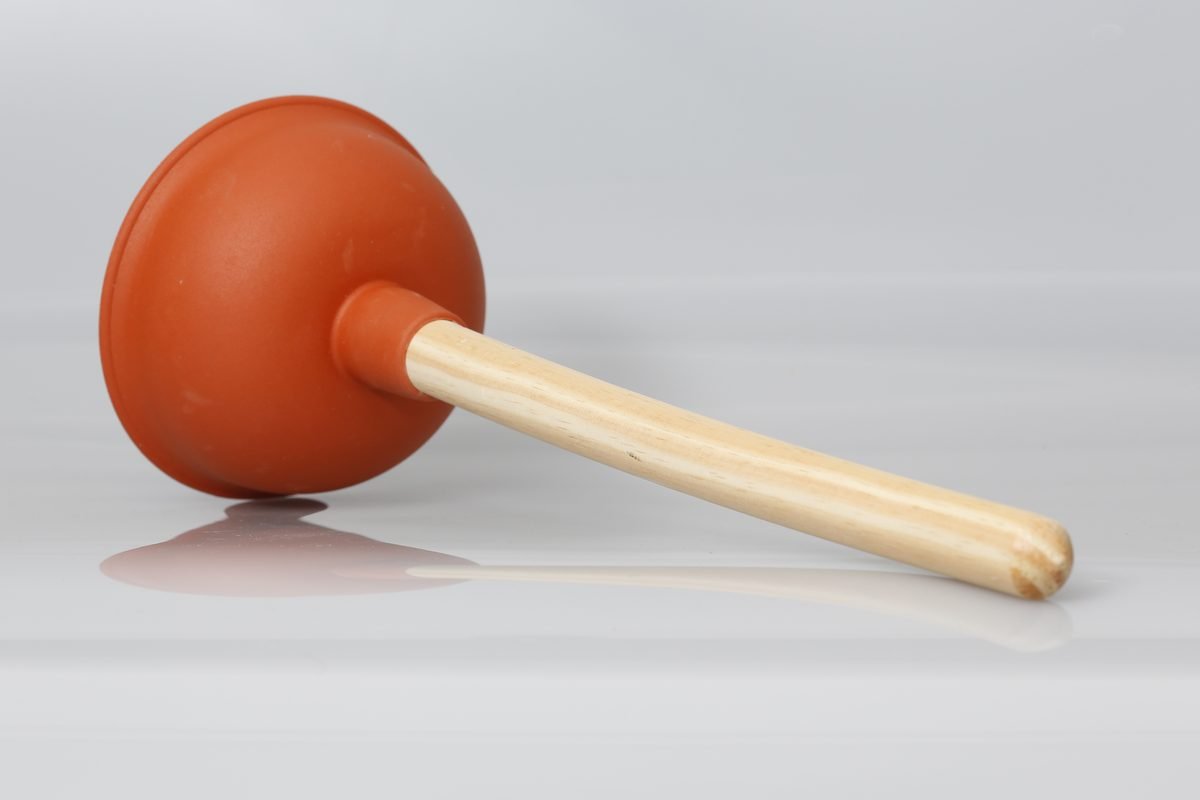
- Flange plunger ($10–$15 — the bell-shaped kind made for toilets)
- Rubber gloves (dishwashing gloves are fine)
- Old towels or bath mats to protect the floor
- Bucket (for bailing water if the bowl is too full)
- Toilet auger ($25–$35) — only if the plunger fails
Step-by-step
- Stop flushing. One flush to confirm the clog is enough. Every additional flush just raises the water level toward the rim. If the bowl is brim-full, bail some water into a bucket first.
- Protect the floor. Lay old towels around the base of the toilet. If this goes wrong, you want the mess landing on towels, not bare floor.
- Use the right plunger. A flange plunger has a fold-out rubber skirt that fits into the toilet drain opening. A flat sink plunger can't seal a toilet drain properly — this is the single most common reason plunging "doesn't work."
- Get the seal right. Lower the plunger in at an angle so the bell fills with water, not air, then seat the flange firmly over the drain hole at the bottom of the bowl.
- Plunge with rhythm, not force. Push down firmly, then pull up sharply — the pull matters as much as the push. Keep a steady pace for 15–20 seconds. You're trying to work the clog loose, not blast it.
- Check your progress. After a round of plunging, the water level should drop on its own as the clog loosens. If it drains, flush once to confirm everything flows normally.
- Escalate to a toilet auger if needed. If three or four rounds of plunging do nothing, feed a toilet auger (a closet auger with a protective sleeve) into the drain, crank it through the clog, and retract. The sleeve keeps the metal cable from scratching the porcelain.
- Try the soap-and-hot-water soak for stubborn clogs. Squirt a generous amount of dish soap into the bowl, then pour in a bucket of hot (not boiling) tap water. Let it sit 15–20 minutes to soften the clog, then plunge again.
- Disinfect when done. Wipe down the seat, rim, and floor around the toilet with a disinfectant cleaner, and rinse the plunger in the (now clean) bowl with a flush of clean water before storing it.
<div class="safety"> <strong>🛑 Stop and call a pro if:</strong> <ul> <li>Water backs up into the tub, shower, or other drains when you flush — that points to a main sewer line blockage, not a toilet clog.</li> <li>The bowl overflows with sewage onto the floor — that's a health hazard; stop, contain it with towels, ventilate, and call a plumber.</li> <li>You've already poured chemical drain cleaner in and it didn't work — tell the plumber before they start, because caustic chemicals plus tools can cause chemical burns.</li> <li>The same toilet clogs constantly with normal use — there may be an obstruction in the trap or a venting problem deeper in the line.</li> </ul> </div>
DIY vs pro cost
| Option | Typical cost |
|---|---|
| DIY | $10–$35 |
| Pro visit | $150–$300 |
A plumber's visit for a simple clog is mostly the service-call minimum. A decent plunger lives under your sink for years and pays for itself the first time you use it.
Printable checklist
- [ ] Stopped flushing after the first sign of a clog
- [ ] Floor protected with old towels
- [ ] Using a flange plunger (not a flat cup plunger)
- [ ] Plunger bell filled with water before sealing
- [ ] 15–20 seconds of steady push-pull plunging per round
- [ ] Water level drops on its own = clog loosening
- [ ] Toilet auger on standby if plunging fails after 3–4 rounds
- [ ] Area disinfected after the clog clears
Related guides
- How to Fix a Running Toilet (Stop the Phantom Flush)
- How to Replace a Toilet Flapper: The $5 Fix (15 Min)