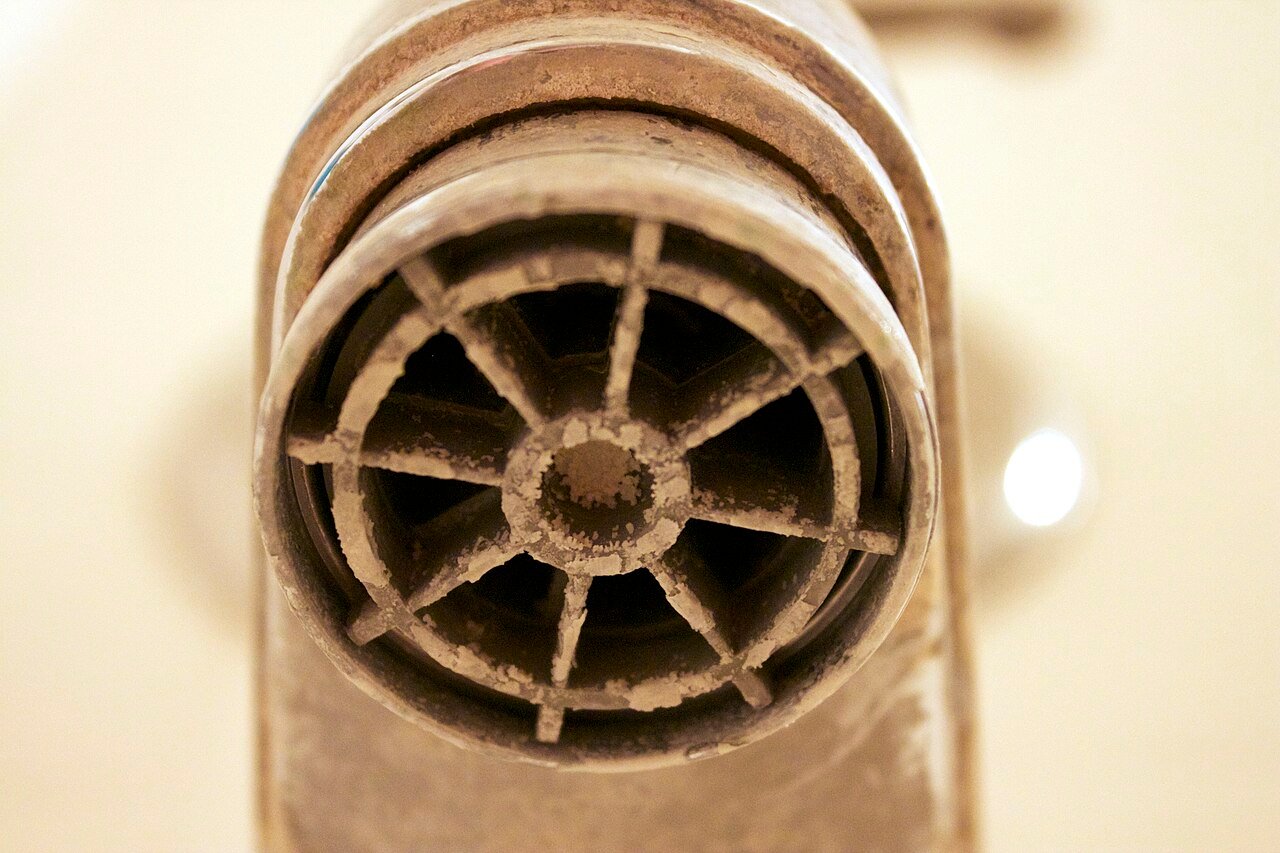
Quick answerSoak the stained area with undiluted white vinegar — paper towels soaked in vinegar held against the stain with plastic wrap for faucets and glass, a vinegar-filled bag tied over a showerhead, and a pumice stone for toilet rings. The acid dissolves the calcium deposits; you mostly just wait.
What you'll need
- White vinegar (a full bottle — you'll use a lot)
- Spray bottle
- Paper towels and plastic wrap (cling film)
- Rubber bands or string
- Lemon (for light stains and a better smell)
- Pumice stone (for porcelain toilets only)
- Rubber gloves
- Microfiber cloths
Step-by-step
- Check the surface first. Vinegar is an acid, and acid etches natural stone — marble, granite, travertine, limestone. If your countertop or tiles are natural stone, stop and use a stone-safe cleaner instead. Vinegar is fine on glass, chrome, porcelain, ceramic tile, and stainless steel.
- Do the paper-towel soak for flat surfaces. Soak paper towels in undiluted vinegar, press them onto the stained glass or faucet, and cover with plastic wrap to stop them drying out. Leave for 30–60 minutes. The wrap is the trick — without it the vinegar evaporates before it finishes the job.
- Bag the showerhead. Fill a plastic bag with vinegar, pull it up over the showerhead so the nozzles are submerged, and secure it with a rubber band. Leave for an hour, then remove and run the shower hot for a minute. Poke any still-clogged nozzles clear with a toothpick.
- Wipe and assess. Remove the towels and bag, and wipe everything with a damp microfiber cloth. Most stains will be gone. For anything remaining, do a second soak rather than scrubbing harder — time dissolves minerals, force just scratches.
- Tackle the toilet ring. For the brownish ring at the waterline, a pumice stone is the fastest fix. Keep both the stone and the porcelain wet, and rub gently — wet pumice won't scratch porcelain, but dry pumice will. For stains below the waterline, pour in 2 cups of vinegar, let it sit an hour, then scrub.
- Rinse everything well. Vinegar left on chrome too long can dull the finish, so rinse all treated areas with clean water and dry them. Drying matters — water left to air-dry just deposits new minerals.
- Prevent the next round. Squeegee shower glass after use — it takes 20 seconds and stops most buildup. In very hard water areas, a water softener is the real long-term answer; no cleaning routine beats soft water.
<div class="safety"> <strong>🛑 Stop and call a pro if:</strong> <ul> <li>Your surfaces are natural stone (marble, granite, travertine) and already etched or damaged — a stone restoration pro can sometimes polish out light etching.</li> <li>Stains are reddish-brown and don't respond to vinegar — that's likely iron, not calcium, and needs a different treatment (or a water test).</li> <li>Never mix vinegar with bleach or bleach-based cleaners — the combination produces chlorine gas.</li> <li>Test pumice on a hidden spot first, and never use it on fiberglass tubs, colored porcelain, or anything but white porcelain.</li> </ul> </div>
DIY vs pro cost
| Option | Typical cost |
|---|---|
| DIY | $5–$12 |
| Pro deep-clean / descaling service | $150–$300 |
Printable checklist
- [ ] Surfaces checked — no natural stone in the treatment zone
- [ ] Vinegar-soaked towels applied and wrapped in plastic
- [ ] Showerhead bagged in vinegar for 1 hour
- [ ] 30–60 minute soak completed (not rushed)
- [ ] Toilet ring treated with wet pumice stone
- [ ] Everything rinsed with clean water and dried
- [ ] Squeegee habit started for shower glass
Related guides
- How to Fix a Leaky Outdoor Faucet (Hose Bib)
- How to Replace a Showerhead in 15 Minutes
- How to Fix Low Water Pressure in Your House
Frequently asked questions
Will vinegar damage my chrome faucets?
Not with normal use — soak, wipe, rinse, dry. The risk comes from leaving strong acid sitting on chrome for hours repeatedly, which can dull the finish over time. An hour is fine; overnight is pushing it. Always rinse and dry afterward.
What about CLR or Lime Away — are they better?
They're stronger acids, so they work faster on heavy buildup. But they're harsher on finishes and cost far more per use. Try vinegar first; reach for the commercial descaler only if two vinegar soaks didn't cut it.
Why do the stains keep coming back?
Because your water hasn't changed. Hard water leaves minerals every time it evaporates — cleaning removes them, but the next shower puts them back. A squeegee routine slows it down; a water softener is the only thing that stops it.
Is hard water harmful to drink?
No — the minerals in hard water (calcium, magnesium) aren't a health concern for most people. It's an appliance and aesthetics problem: it shortens the life of kettles, heaters, and dishwashers, and spots everything it touches.
Advertisement